Bench Two notes this issue Techniques, not reviews
07Quarterly
Weight And Momentum emblem Weight And Momentum How movement feels, measured

Bench notes explain how a measurement is taken. They contain no verdicts and are written so that a reader with a capture card can check our figures or dispute them.

Issue seven · Bench

How the figures are actually taken

Two techniques we use in every review and had never written down. Both are simple, both have failure modes we have fallen into, and both are described here in enough detail to be repeated.

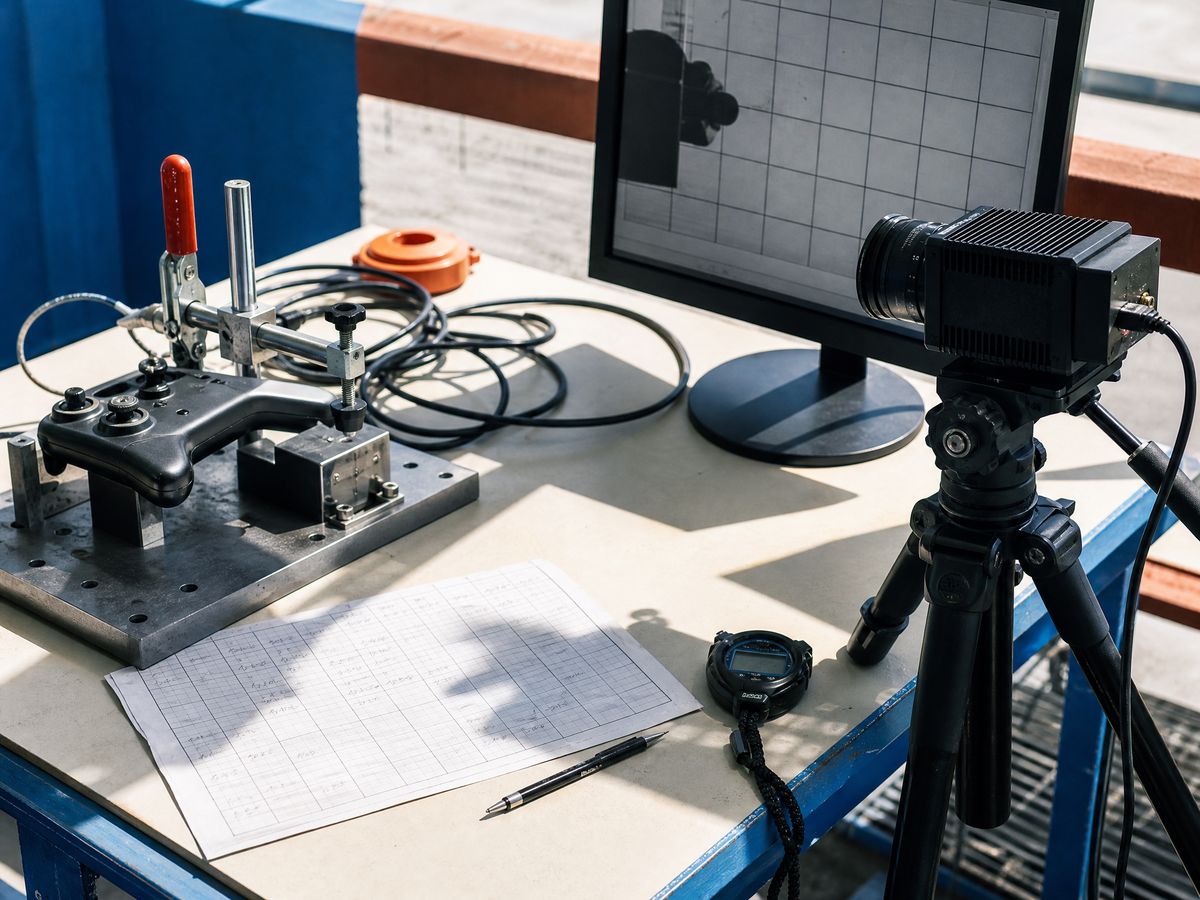
A test bench in daylight with a controller clamped in a metal jig, a high-speed camera on a tripod aimed at a monitor, a stopwatch and a grid of pencilled figures
The jig, which exists so that a button press begins at the same moment every time.
01
A figure at the apex of a long jump between two rock spires

Reading A Jump Arc From Capture

How to extract rise frames, apex behaviour, fall frames, coyote window and input buffer from a single recorded jump, and why the apex is the only part of the arc where the numbers usually surprise you. Includes the two mistakes that produce wrong coyote figures.

Applies to PlatformersNeeds 240fps captureDifficulty Low
02
A heavy tracked vehicle sliding around a wet gravel bend

Measuring A Turning Circle Without Units

Games rarely tell you how large anything is. This note sets out how to establish a scale from the character model, use it to measure a turning circle, and check the result against a second reference so that a wrong scale does not propagate through every figure in a review.

Applies to Driving, mechsNeeds Free cameraDifficulty Moderate

Why publish the technique

A publication that prints numbers has an obligation to explain where they came from, and there is a second reason that matters more to us: the figures in these reviews are checkable, and we would like them checked. Every measurement in issue seven can be reproduced by somebody with a capture card, a controller and patience, and if any of them are wrong we would rather find out from a reader than not at all.

The techniques are also less obvious than they look. Frame counting seems trivial until you have counted the same jump three times and got three answers, which happens because a jump has no clear first frame until you have decided what a first frame is. The method page gives the definitions; these notes give the procedure.

Two figures in past issues were wrong and both were corrected after readers repeated the measurement. One was an arithmetic slip. The other was a genuine methodological error in how we had been establishing scale, which is why the second note in this issue exists.